

Member Spotlight: Sarah Goslin
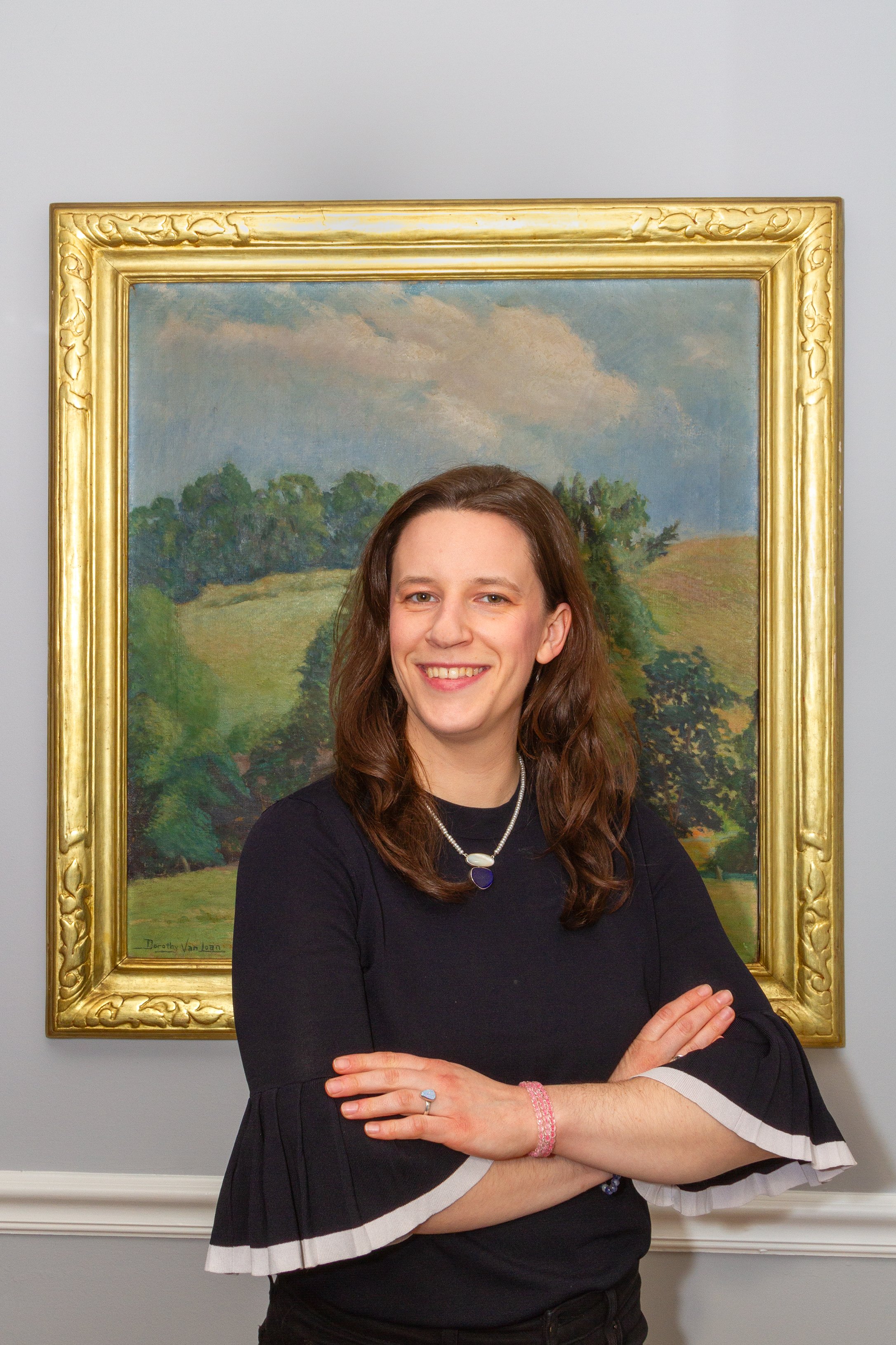
Sarah Goslin
Decorative Arts Cataloguer and Conservator and Restorer of Wood Furniture and Objects at STAIR and Stair Restoration
Hudson, NY
https://www.stairgalleries.com/
@stairgalleries and @stairrestoration
Fine Objects Society Board Member since 2025
Cabinet of Curiosities
Favorite design era?
I have to give my favorite furniture history periods - English and American William and Mary furniture and American Pilgrim Century furniture.
Matte or glossy?
Matte!
Favorite flea market in the world?
While not a flea market, I enjoy any artisanal market in or around Mexico City, where I grew up. I love seeing the continued traditions of handcrafts from different regions in Mexico.
What’s the object you can’t live without?
The first Tramp Art piece I collected - a miniature chest of drawers I use daily as my jewelry box.
Best tool in your studio?
My brush roll and polishing pad. These are the tools I use to create a period look or finish towards the end of a project, when completing last-minute touch-ups on anything that still catches the eye. The work is in the details, so I choose each brush with intention and make up a new polishing pad each time, custom to the size and scope of the work.
In an age of machine precision, what role does imperfection play in your evaluation of a piece?
Oftentimes, restoration involves what my mentor, Nigel Thomas, refers to as “seeking perfection.” Our goal is to preserve and then improve imperfections while maintaining the integrity of a piece. While imperfections can be indicators of age and originality, they can also show up as previous repairs done poorly. The former tells the history of an object. For example, I love seeing worn stretchers on chairs or tables where people have rested their feet over the course of centuries. Age splits on the sides of case furniture indicate a piece has been used and loved for a long time. The latter form of imperfections can involve unsightly repairs by an inexperienced hand; these are the ones we restore and conserve with care. In both restoring and cataloguing, I often consider what imperfections on a piece tell you, when do you decide to fix an imperfection or leave it be? These questions play a primary role in my evaluation of any piece with which I come in contact.
How has your eye evolved over the years—are there things you once loved and now find less compelling, or vice versa?
My eye has evolved over the last decade to be able to spot, for example, reproduction versus period pieces of furniture. My mentors have taught me to look at things in a certain way, so now every time I enter a room, furniture and objects are the first things I notice. When I first started working in antique furniture, I asked our head specialist how he determined a reproduction from a period piece. His answer boiled down to, “you just know.” Of course, there are things to look for, but now that I have seen hundreds of pieces of period furniture, I understand his answer. When you learn what to observe and have handled enough original material, reproductions or repairs become easy to identify. Throughout this learning process, a gut instinct develops, you learn to notice when something feels “right” and begin to trust your intuition on an initial evaluation. Now, I love the thrill of uncovering the history of a piece of furniture or decorative object.
What’s your philosophy on the tension between preservation and livability in interiors or exhibitions?
I often hear the argument that people or families “can’t” live with antiques because they consider them to be relics, too fragile or expensive to be handled and used. Many of us have memories of a parent or grandparent’s home in which certain objects or entire rooms were “off limits” for this reason. As professionals and enthusiasts in the Fine Objects Society, it is our responsibility to educate those interested about the proper care and maintenance of antiques to provide ultimate enjoyment. My philosophy is that we can easily incorporate antiques or vintage items into our daily lives in careful and responsible ways as stewards who preserve them for generations to come. Use of these objects in daily life can bring great joy and ritual to the otherwise mundane. For example, a coworker of mine makes her coffee in an antique silver coffee pot every morning. Another uses 18th century English drinking glasses at home. I recently celebrated Thanksgiving with my family and our table consisted of the Gorham flatware service my grandmother collected during her lifetime and the Wedgwood porcelain dinner service my parents received as a wedding gift. My winter sweaters are stored in a cedar-lined American Empire chest of drawers. The list goes on, and there are many ways to incorporate historic objects into one’s daily life while maintaining them. I don’t believe antiques should be feared or viewed from afar; I think they should be used and loved.
What can decorative objects teach us about how people once lived—and how we live today?
I recently came across a quote from a late 19th century British member of parliament and educator, J.H. Yoxall, in The Blue-China Book on historical English Staffordshire pottery. It read, “The man who will tell the story of a race, a nation, or a period according to the clothing, dwellings, utensils, and everyday art of it will be… the only true historian of them all… So let us glorify our hobby.” I think this nicely sums up the importance of historic objects as a primary source for understanding how people once lived. The history of furniture and decorative arts is inherently social. These objects tell us about the materials that were used and available at the time they were made and show us how form and function evolved over time. Consider the evolution of seating furniture from practical stools and benches to formal parlor furniture, to, eventually, the comforts of the large, plush upholstered sofas and couches we lounge on today. The dining table lays out the history of entertaining and social protocols. No longer are we setting our tables with full flatware services and making sure the asparagus server is only used for asparagus, but the study of these utensils tells the story of how social gatherings once looked. I feel the way we live today is often reflected in the items available to us – items made of inexpensive materials and mass produced. Appreciating historic objects teaches us to slow down. It allows us to reflect and learn about those who came before us and appreciate the rituals of daily living.